

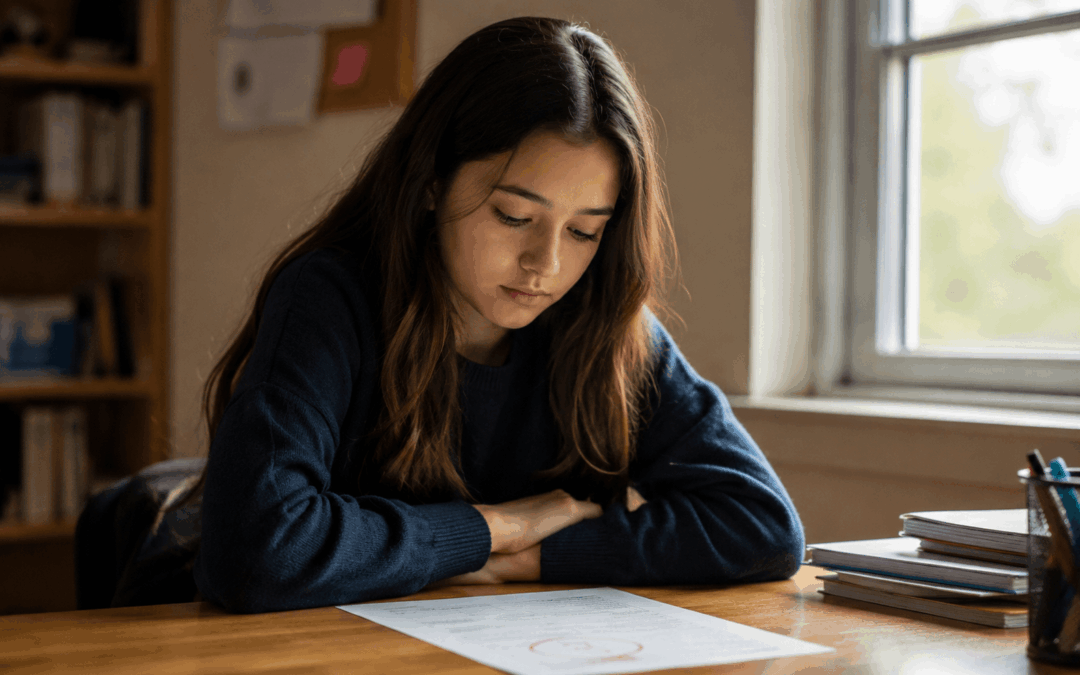
She failed two class tests in the last seven days. One of her favourite subjects – history. Another one of her least favourite – maths.
There were tears.
She’s a ‘good student’ – in the A set, gets the Head’s Commendation award most terms. But two failures in one week and suddenly, in her head, she’s not getting into university, not getting a job, and everyone hates her because she’s brought the class grade average down.
Did I mention she’s in Grade 9?
This is not a problem specific to her school or to my daughter. It’s a global phenomenon – failure is still seen as a negative, rather than an essential part of any learning process – whether in a classroom, a boardroom or around the dining room table at home.
Now, before you roll your eyes at me – I get it. I know the system wasn’t designed to celebrate failure. But that doesn’t mean we can’t change what happens inside it.
“I’ve missed more than 9,000 shots in my career. I’ve lost almost 300 games. Twenty-six times I’ve been trusted to take the game-winning shot and missed. I’ve failed over and over and over again in my life. And that is why I succeed.” – Michael Jordan
Kids leave school knowing how to get an A – but not knowing how to be a lifelong learner. They pass the test, but they don’t leave with a love of learning or the resilience to keep going when things get hard.
Long story short – I honestly believe that we’re failing our kids by making them pass. I think a more useful question to ask is one my colleague, Keith Coats, often puts to leaders in boardrooms around the world:
What are we missing, because of what we are measuring?
Penicillin. WD-40. The pacemaker. Velcro. The Post-it Note. Five things you’ve used, all born from failure. None of them were planned, yet all of them changed everything – and every single one of them started with someone getting something wrong and getting curious instead of giving up. The full stories are in our guide here…
A short, practical resource for parents, teachers and school leaders who are ready to have a different kind of relationship with failure. (Please do pass it on to someone in your community who might need it.)
→ Download the free guide here.
If this resonated beyond the guide, then Jude would love to bring this conversation into your school. Whether that’s a single morning with your staff and parents, a quarterly toolkit that keeps the thinking alive, or a full year of working together… there’s an option that fits where your school is right now.
P.S. Jude’s latest Future Smart Parent podcast episode is out now – and this one is worth making time for. She sat down with Tebogo Maneli, history teacher and DEIBS practitioner, to talk about Indigenous Knowledge Systems, what representation actually feels like (versus just understanding it intellectually), and what it really means to raise children who know who they are. Listen here.