


For real.
Enter Zanele – and a beautiful story of one passionate woman, her love of learning, and what happens when a community rallies behind both.
A Classroom Like No Other
I first met Zanele in 2022, when she was a student teacher at a small farm school in the Eastern Cape – the school my children attended for a few years. A place where kids climbed trees most days, where marbles were won and lost, and the only uniform was the dusty footprints left on the playground.
Watching Zanele with her class – whether at the desks, in the school vegetable garden, or on a walk down to the river – always left me in quiet awe of that magic that the very best teachers seem to just have.
You know the magic I’m talking about. The kind where a teacher takes a butterfly wing a child finds on the classroom floor and turns it into a twenty-minute adventure about caterpillars and colour, about symmetry and life cycles – all while gently reminding those kids that no two butterfly wings are identical. Just like them.
That’s Zanele. Her joy is so genuine and infectious, that it becomes almost impossible for the people around her not to get swept up in the wonder of learning too.
And so, our journey began.
The Spark: Social Emotional Learning in the Community
Zanele and I would often chat, and one day she mentioned a Social Emotional Learning (SEL) course being offered by the Kariega Foundation. SEL was something Zanele had felt drawn to long before it came to her with a label or a title.
She was acutely aware of its absence in her community – having grown up around families far more worried about where the next meal was coming from than “the luxury” of learning to name their emotions, navigate conflict, understand body safety, or discover how gratitude can actually rewire the brain.
Listening to her that day, I knew – head and heart – that this was a very real opportunity for TomorrowToday to invest in my local community and support Zanele’s learning journey. Signing her up for the SEL course, knowing she would be backed by the Kariega Foundation’s established expertise and presence in the community, was a no-brainer for our entire team.
A Word on the Kariega Foundation
Their mission: “to provide sustainable solutions to protect, preserve and benefit our planet, people and wildlife forever.”
And that’s exactly what I see them doing in our community, every single week, through education, skills development, conservation, youth development, and wildlife protection.
The Kariega Foundation is part of one of the Eastern Cape’s most magnificent Big 5 game reserves, and every time I make the 45-minute drive to visit family in Kenton-on-Sea, I’m treated to sightings of zebra, giraffe, and the occasional buffalo, lion, elephant, or rhino along the national road.
What I love most about the Kariega Foundation’s approach is their understanding that any system only works when all its stakeholders work together. Ecotourism for jobs. Education. Food security. Entrepreneurship. It’s not charity – it’s an ecosystem.
Lindy Sutherland, CEO of the Kariega Foundation, shared this story:
“A staff member at Settlers Drift approached Lindy with concern about her young son, who is ADHD and needs additional support. Living on site for 21 days at a time, with her child in the care of others and no family nearby, she was worried. Lindy told her about Zanele’s after school programme. It turned out she lived across the street.
A month later, Lindy was back at Settlers. The same staff member found her, this time with a huge smile on her face. Her son was now with Zanele. And the positive impact had been almost immediate”.
That is what Zanele does. That is what showing up every day looks like.
From One Classroom to a Community Movement
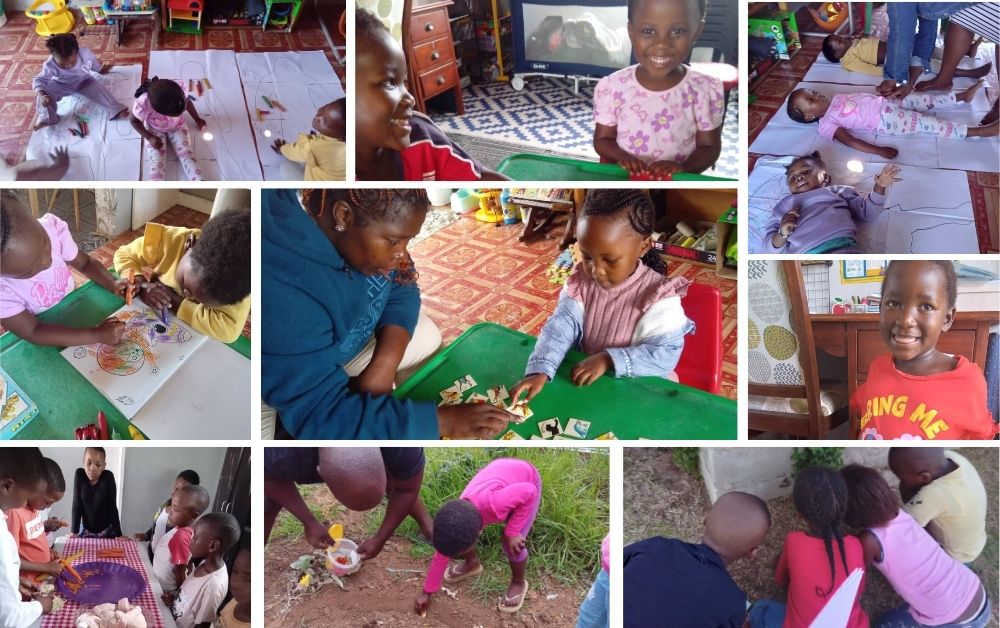
The feedback from Zanele’s SEL facilitators was immediate: her enthusiasm and commitment were clear to all. And she wasted no time putting her new skills to work. Every morning, she experimented with what she was learning in her classroom. Every afternoon, she volunteered at the JOT Reading Club, teaching children from her community to read – planting the early seeds of what would eventually become Imbewu – The Seed, her own crèche and afternoon learning space.
What I want you to picture here is what I witnessed one day when visiting Zanele at her afternoon classes: Sharing the three bread rolls in her kitchen among the eight children who had shown up to her afternoon class that day, fully understanding that no learning could take place with hungry stomachs.
Grade 4, 5, and 6 learners who couldn’t yet read English, whom she would take all the way back to phonetic foundations. Not because she was paid to. Because she chose to.
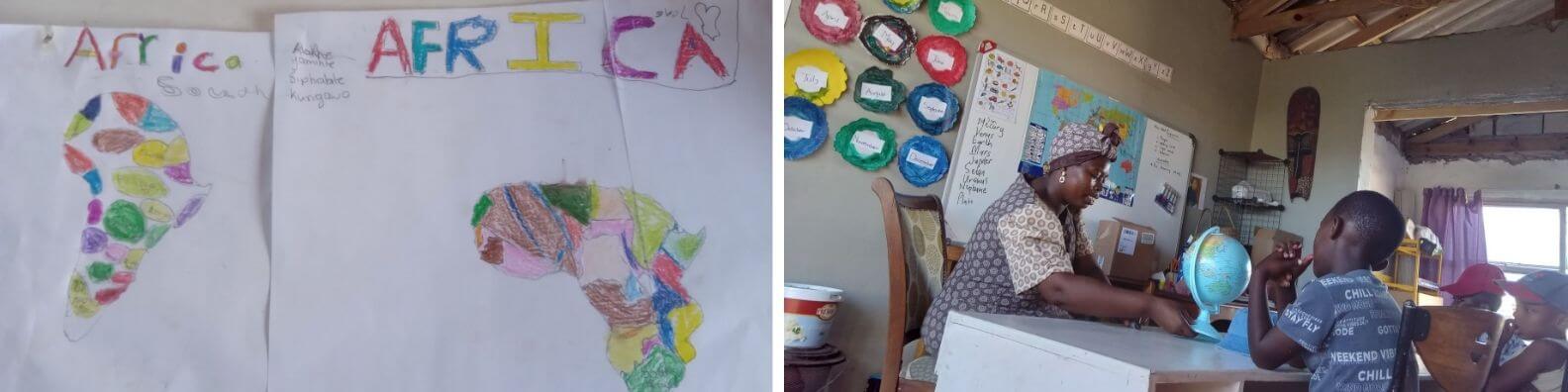
Fast forward to 2026, and the ripple effect of that commitment continues to grow. Zanele has built Imbewu – The Seed, where she offers both afternoon homework sessions for 29 children, supporting many of them with reading and homework, and has a small but safe and stimulating crèche, currently nurturing four young children in the mornings.
Last year, she raised funds to take her students on an excursion to the Volkswagen factory in Uitenhage – likely the furthest most of them had ever been from home – and returned, in her own words, with kids whose “minds were exploding.”
And true to her love of learning, Zanele continues investing in herself. She is currently completing a rigorous Early Childhood Development (ECD) training programme hosted by the Indaba Foundation in partnership with the Kariega Foundation – designed to equip and empower women from the region’s lowest-income communities to become leading role models, helping to build more equitable, future-ready, and economically sustainable communities.
She also has a dedicated mentor who works with her fortnightly on budgeting, planning, and strategy – because this isn’t just a story about heart. It’s a story about building something that lasts.
Why This Matters to TomorrowToday
At TomorrowToday, we think a lot about the future – about the trends shaping our world, about what organisations and leaders need to do to thrive in the decades ahead. One of our core beliefs is this: the best way to predict the future is to create it.
Our commitment to 1% for the Planet – setting aside 1% of our annual sales revenue for causes that make a genuine difference – is a structural expression of that belief. But as our colleague Dean puts it, this isn’t CSR. It isn’t a marketing exercise or a box to tick. It’s about asking: what is fundamental to our business and the world we want to help create?
Our 1% for the Planet partnerships span both people and planet – from planting trees to nurturing the humans who will one day steward them. And when it comes to the human side of that equation, the answer keeps coming back to education. To future leaders. To the children who will one day inherit the challenges and opportunities we’re all navigating right now.
Because the world they’re growing up into will demand constant adaptation and the single greatest skill, we can give any child is the ability and the genuine desire to keep learning. To become, in the truest sense, lifelong learners. Which is exactly what Zanele models for them, every single day.
What she is doing – in a small community in the Eastern Cape, with bread rolls and borrowed afternoons – is educating the future. And in a world that can sometimes feel overwhelming and out of our control, supporting work like hers is both an antidote to helplessness and a reminder that local, personal, and meaningful action is available to all of us.
Business as a force for good isn’t a slogan. For us, it looks a lot like a small learning centre in the Eastern Cape, and a teacher who shows up every single day.
Want to help?
Zanele has a wishlist for her school – and if this story has moved you, please get in touch with Jude, who will happily facilitate donations through the appropriate channels:
- Sponsor an underprivileged child’s classes for just R3 600 (£160) for the year, with quarterly feedback on the learner’s progress.
- Donations for food for both the creche and the afternoon class.
- Preschool tables and chairs.
- Laptop for administration.
- Financial assistance for finishing Phase 2 and Phase 3 of the building.
Zanele has already shown us exactly what she does with support. These are just the next steps.
And if Zanele’s story has sparked something in you beyond a donation – good.
If you run a business and you’re not yet a 1% for the Planet member, this is your nudge. It’s a simple, structural commitment to directing 1% of your annual sales revenue towards environmental and social causes that genuinely matter.
And if you’re already a 1% for the Planet member looking for a partner to invest in, we can certainly recommend the Kariega Foundation. They are doing the hard, unglamorous, systems-level work that actually moves the needle – in conservation, in education, in community development. Find out more about their work here.
Because the best way to predict the future is to create it.