

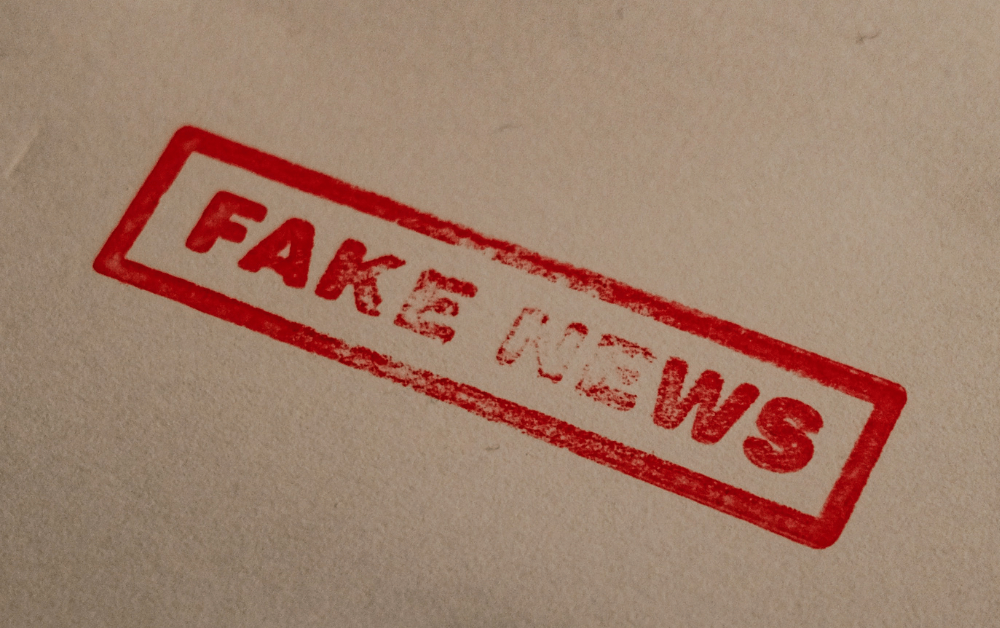
Deep fakes have been around for a while – in fact, way back in 2020, I was one of the first people I knew to feature in a deep fake video (it wasn’t very good, but it was a sign of things to come).
The era of fake videos has arrived much faster than we thought it would. It’s here, right now. We need to learn how to navigate a world in which we cannot trust what we hear, read, or see. It’s sad, but it’s the reality (or is it real at all?).
This week, we revisit some of our predictions about the future of deep fakes and fake news and show you what’s happening right now. Watch these three episodes from our archives:
- Episode 4: Deep Fakes
- Episode 94: AI-generated news
- Episode 122: Digital copies of ourselves
Join us next week to discover six things we can do about it and learn how to live successfully in a post-truth world.
TRANSCRIPT
Ai or not? My name is Graeme Codrington. Or is it? Am I real? Or is this just AI?
This is Throw Forward Thursday. My name is Graeme Codrington. But you don’t know whether I am real or not. Let’s talk about deep fakes.
In this season of ThrowForward Thursday, we’re going back to some of the issues that we’ve dealt with in the past. And it was four years ago when we first talked about deep fakes in episode four of ThrowForward Thursday. (Links will be in the show notes so that you can go and watch those videos again.)
But I was one of the first people I knew to actually be deep faked. You can see the whole story back in episode four, but it was just a complete coincidence. Somebody just randomly found a picture of mine online, thought it was a stock image, and then did what four years ago looked fairly impressive, which was to just make my mouth move while they put other voice-overs over it. It wasn’t very convincing, but it still was one of those weak signals. And that’s what we do at Tomorrow Today. We have a look at the weak signals and ask, But what if these things become big?
We’ve also had two other episodes in which we’ve looked at fake news, and then we looked when the generative AI models released their video production models in episodes 94 and 122. (Again, link links in the show notes if you want to watch those episodes in full). But we had a look at the implications of living in a world where you can no longer trust your eyes.
Now, it’s probably for centuries that we have known not to trust text. We understand propaganda, we understand that things written in newspapers are written from a certain perspective to achieve certain outcomes, and you’ve always been sceptical and taught to be so. But for most of our parents and grandparents’ lives, they believed photographs until it became obvious that photographs themselves could be staged. And then, of course, Photoshop came along and we realised, Now we can just Photoshop it, right? So photos can be made up, and with the latest generative AI image generations, although we can still see where some of them are AI-generated, they’re getting better and better and better.
But it’s only been in the last few years that we’ve also realised just how easy it is to create fake and manipulated videos. And so now we have to acknowledge and admit that we already live in a world I thought we had maybe till the end of this decade, but right now, here we are. We are living in a world where you can just create fake videos.
The crazy thing is, and this is why I really wanted to do an update, is that now we are seeing people like the President of the United States, Donald Trump, creating his own fake videos. One that I remember was him creating a fake video of what a Garza Rivera could look like. Very bad taste, in my opinion. And then just this last week, as I’m recording in October of 2025, he put out a fake video, and clearly it was meant to be seen as a fake, but it was put out of Chuck Schumer and Hakeem Jeffrey, the Democratic guys, while they were busy doing a press conference against his government shutdown. If you know American politics, you’ll understand the context. But basically just being pretty racist, let’s call it for what it was.
Now, again, this video was not intended to be taken as real. It was intended as a bit of satire and mocking, and, as I say, a racist trope. But the fact that the President of the United States is using this technology to create deep fakes or just fake news, this is new, and this is something we haven’t experienced before, and we now live in this future. This future is already here. As our team at Tomorrow Today says, the elephant is in the boardroom, and it is causing trouble.
Next week, we will have a look at what does it mean for us to live in a post-truth world. What do we have to do as individuals? What could you and your organisation do? And are there any things as a society, as a humanity on this planet? Are there policies and principles we could put in place that would help us to live successfully, to navigate a post-truth world?
But for now, we have to be sceptical of everything that we see and learn the skills of being able to critically think through whether something could be true or not. We need to have more courage to be able to go truth-seeking, and that probably requires some curiosity as well. We need to make sure that we check things before we pass them on, and finally, we need to make sure that we support the sources of truth that we trust and believe are doing the right things for the best reasons.
But more of that next week. Please make sure you join us next Thursday for insights into what a world filled with fake news and deep fake videos, what that requires of us, and how we can live successfully in that world. I’ll see you next week.
At TomorrowToday Global, we help clients around the world analyse major global trends, developing strategies and frameworks to help businesses anticipate and adapt to market disruption in an ever-changing world.
Subscribe to our team’s weekly newsletter filled with insights and practical resources to help you succeed in the future of work.
For all enquiries, please use this email: [email protected]
For the past two decades, Graeme has worked with some of the world’s most recognised brands, travelling to over 80 countries in total, and speaking to around 100,000 people every year. He is the author of 5 best-selling books, and on faculty at 5 top global business schools.