

Today’s insights are brought to you by my colleague, Jude Foulston, our Digital Director and host of the Future Smart Parent Podcast.
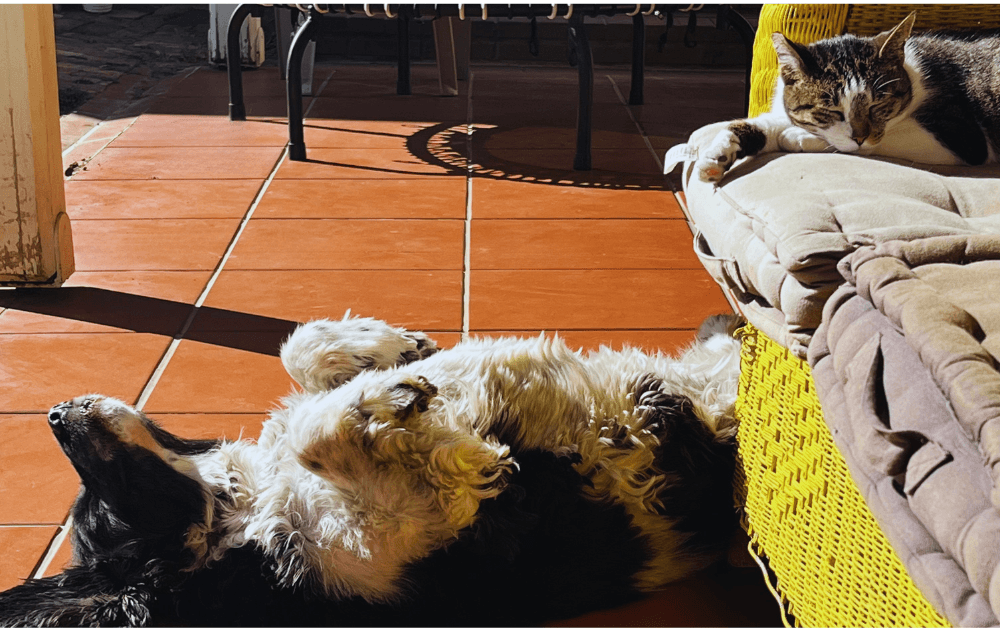
As I sit in the sun typing this, our dog Marmite and our cat Tips are right beside me.
I do work from home, so they’re always around, making me laugh, giving me love, and dragging me away from my desk when the day’s run too long and a walk is in order (for both of us).
I recently recorded a Future Smart Parent podcast episode with a schoolteacher who brings her dog, Frankie, to school, and it got me thinking about why schools and workplaces should take their ‘pet policies’ more seriously than most of them do. (You can listen to that episode here.)
That conversation got me thinking about the bigger picture and what our pets actually do for us humans.
Mars Global Pet Parent Study puts the worldwide pet population at over a billion, with more than half of us now sharing our homes with a cat or dog. A second study, the Pet-Friendly Advantage 2026 Workplace Report, picks up the thread and asks what all of that means for how we work.
With those numbers, it makes sense that 83% of people surveyed say pets have a positive impact on their mental wellbeing, reducing stress and creating more opportunities for connection.
Imagine, 30 years ago, asking your boss if you could bring your dog to work.
If I think back to my first job: I arrived at 9am, left at 5pm, and that was that. Not even a BlackBerry. No email in my pocket, no social media, no online meetings, no Google Drive – none of the always-on, work-everywhere reality so many of us now live inside.
Somewhere between that first job and today, work moved into our homes. It sits at our kitchen tables and follows us on holiday. And yet, somehow, our personal lives still don’t seem quite as welcome in the office.
But, the world, the ‘workers’ and the workplace is changing and according to The Pet-Friendly Advantage 2026 Workplace report (surveying over 16,000 European workers):
• Over half those surveyed would consider switching jobs for an employer that allows pets.
• 81% of all employees – including those without pets – believe a pet-friendly office creates a more relaxed, positive atmosphere.
• 35% prioritise pet-friendly policies over perks like parental leave, private healthcare, company socials or free snacks. (The pull is strongest among 25–34 year olds (62%), but it stays high right up the ages.)
• And yet 55% of job seekers can’t easily find out whether a company is pet-friendly at all.
I don’t have all the answers here. But I do know our pets play a genuinely significant part in many of our lives.
I can only imagine how an idea like these lands in an HR department – some delight, some dread, and probably a few raised eyebrows about allergies, logistics, and the colleague who’s nervous around dogs.
I get that. But imagination, or specifically strategic imagination, is a tool every leader needs right now, and this is exactly the kind of concept that could be run as a small, well-designed experiment – one team, one department, clear ground rules. I’m not suggesting 50 dogs rock up on Monday morning.
Companies like Salesforce, Google, Ben & Jerry’s, GoDaddy and Uber have already made room for pets at work. Add my recent conversation with Laurelle – Frankie’s Mom and schoolteacher, and this research, and it starts to feel clear:
Letting a dog come to school or work could be good for the humans in your community and for the bottom line of whatever you’re producing – whether that’s shareholder dividends or class grades.
I’m curious, does your organisation have a pet policy? I’d love to hear from you.
Jude Foulston author of today’s blog, helps parents and schools make sense of the changing world we’re raising our kids in. Alongside writing for parents and her Future Smart Parent podcast, she also runs workshops for schools – helping staff and leadership lean into change by understanding the future.