


Too often, learning has been shaped by the information or knowledge sought. I mean, that sounds obvious, and it is!
This shaping has been hardened by an educational system where Information, and the ability to regurgitate it to a satisfactory level, rather than learning, becomes the prime objective of study. It is then reinforced by the perception of what is required to ‘get ahead’ in one’s career or profession and so having an MBA (or other such credentials) is a sought-after accomplishment. In doing so, the joy of curiosity has been lost.
For too long, we have tied learning to a goal. When there is talk of curiosity, exploration, experimentation, better questions, reflection and other refractions of curiosity, eyes roll, and serious people (those with leadership responsibilities) can barely conceal their irritation at the distraction to their serious business that such detours represent. They indulge it for a short while before getting on with their busy and demanding lives.
Just the other day, I was engaging with a Board of Directors for a large mining company, where I was challenged on this very point. The context was my suggestion that when the ‘going is tough’ (as it was for them), instead of emphasising the need to ask questions, experiment, display curiosity and learn, we focus instead on tougher targets, tighter controls and stronger rewards and sanctions.
It is a misplaced focus, according to my friend Jules Goddard in his marvellous book (co-authored with Tony Eccles) Uncommon Sense, Common Nonsense. Smart, adaptive companies understand that learning needs to be part of their DNA and that learning is the lesson.
Realising and embracing this is the surest way to avoid (or navigate) the type of threats and challenges that can prove fatal. To do so takes extraordinary courage in the face of the conventional business ‘wisdom’ that advocates for control over curiosity and trusts experience over new learnings.
I have witnessed this on countless occasions.
The joy of curiosity, and all its associated benefits – something that comes naturally to children, seems to fade with the arrival of adulthood. We lose the vitality that new discoveries bring and cease trying to understand, replacing the invitation to do so with critical judgements and confident certainty.
Our own blind spots inhibit our peripheral vision; our ability and willingness to explore the edges, the grey, the unknown. The habit of attention to our own inner experience becomes muted and, at worst, lost. As Mark Twain framed it: ‘What gets us into trouble is not what we don’t know. It’s what we know for sure that just ain’t so’.
How then can we rediscover that ‘habit of attention’ – that curiosity that once enfolded us so effortlessly?
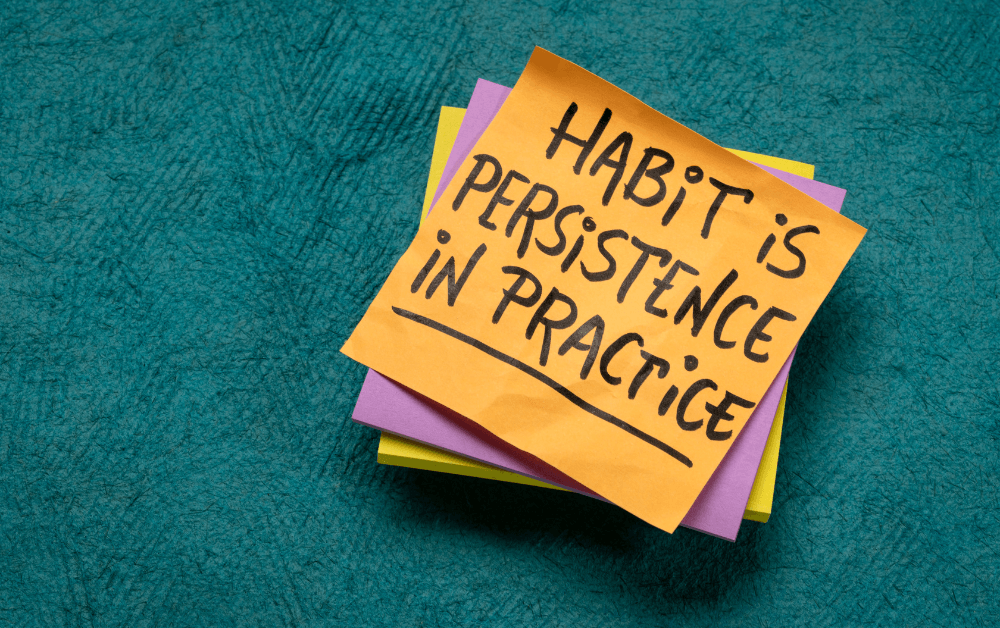
Here are three things that might just help.
1. Recognise (and stop) listening from your own agenda. No matter the occasion, we usually evaluate and judge what the other person is saying in relation to our own opinions, values, standards, experiences and measures.
We listen through a filter of our own understanding and perspective. We hear little of what is said and see less of the person saying it. Becoming aware of this default setting is the first step in being able to disable it from inhibiting how we listen, hear and relate to others.
Exercise: In a conversation you have today, try to listen from this perspective. Test how easy it is to ‘suspend’ your ‘listening to respond.’ You may have to say (when the listening is done), “Let me think about that for a minute” as all your concentration has gone into the listening rather than crafting a ready-made response. Sounds easy; it isn’t!
2. Acknowledge and embrace your own biases. Ignoring them or pretending that we have transcended them serves no one. We’re all familiar with their loud and shrill voice that echoes within, as externally we observe and ‘listen’. It takes real courage to unmask them and to bring them into the light of day.
But, to do so, is to take the first tentative steps on the uneven pathway towards ‘authenticity’ – something we hear a lot about, especially in leadership discourse. The word ‘integrity’ (something else we hear a lot about in leadership!) is rooted in the Latin word ‘intergratis’, which means to ‘integrate’. In other words, ‘integrity’ is, at its very core, all about integrating our inner selves with our other selves – how we show up in the world and to others.
It is that simple, and that difficult. I asked a psychologist about bias. She said: ‘Bias is built into our automatic thoughts (by default) – to speed up cognitive processing and optimise brain efficiency. This is where the faultlines are to be found.’
Exercise: Notice how quickly you judged someone today in a conversation – what was that judgment based on? When you think of “handsome, beautiful or successful”, what visual images come into your mind? What do these people look like, wear or engender?
3. Understand that growth has its own time frame. A wise friend, Carlene, who was a ‘Horse Whisperer,’ taught me that ‘it takes the time it takes.’ It is a hard habit to practice in an impatient and hurried world where achievement and results hold sway. Raising children or caring for the elderly offers us lessons in this understanding. Hospice worker and author Rodney Smith wrote that, “the most difficult part of listening is to leave the other person alone.” The greatest gift we can offer others is our understanding.
In the Thai language, the word for understanding can literally be translated as “entering the heart”. Listening with our head and heart allows us to suspend judgement and cultivate the ability to ‘see’ and understand the other person.
Once this takes root, we are then able to access the patience that allows growth to take place – the ability to accept that growth ‘takes the time it takes’. And sometimes we get to be awed spectators to this glorious process. This is the gift of our attention.
Exercise: With whom or what do you need “to be more patient?” What prevents you from practising such patience? Were you to practice this patience, what might be the outcome for both you and them in the situation?
None of these (three habits) are easy, but I believe they sit at the heart of what it means to be human. It seems trite to link them to habits of leadership, but of course, that is the terrain where such habits need discovery and practice more than ever.
Leadership, at its core is about influence, and these three habits, understood and practised well, will greatly enhance any leadership practice.
Learning these habits is the lesson. Enjoy the journey.
Keith Coats helps leaders re-discover the art of learning – in themselves and in their teams.
Book Keith for your next leadership conversation and explore how curiosity and attention can transform your organisation’s future.